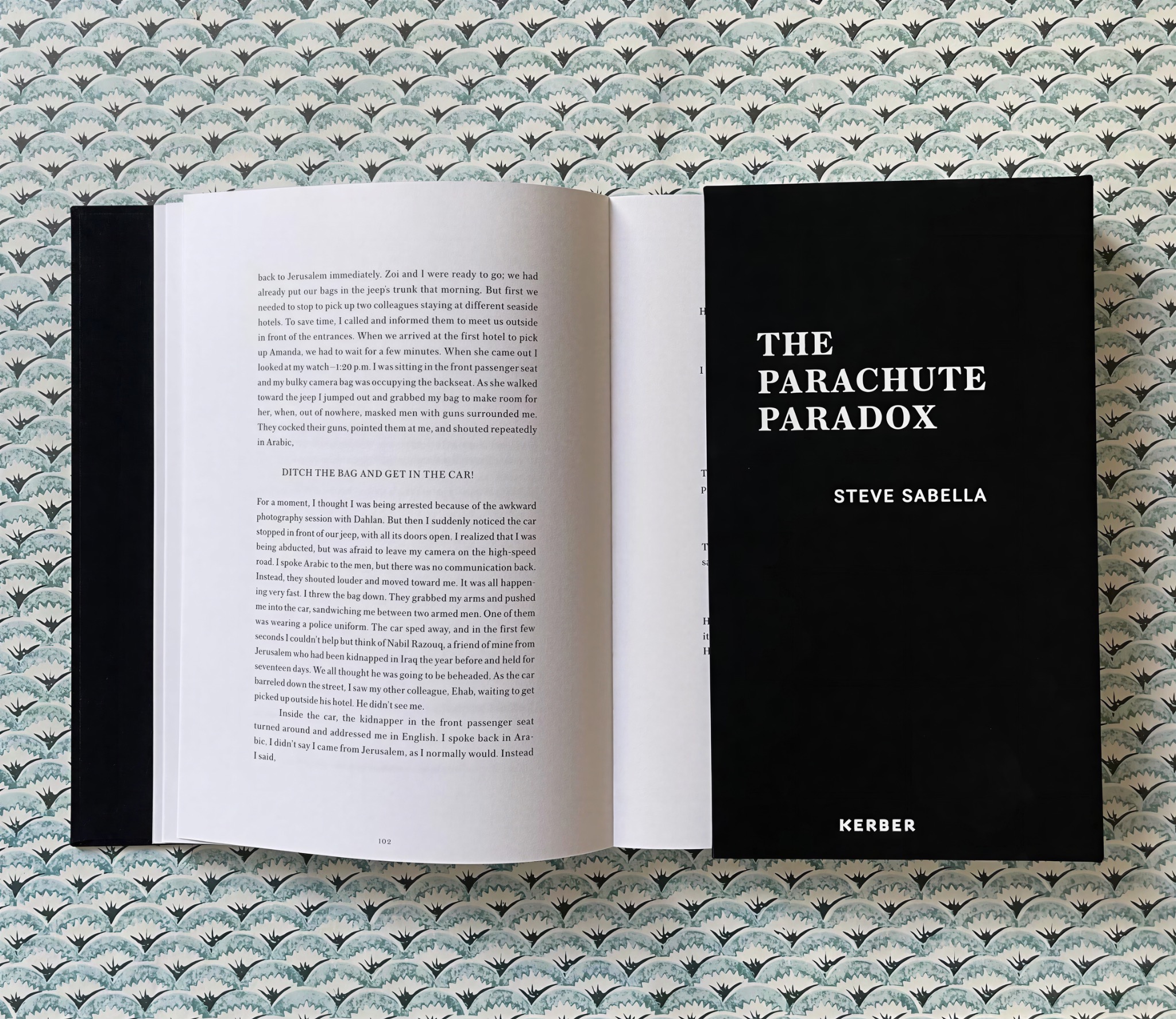
The Parachute Paradox — Steve Sabella

A book that has travelled for ten years
is ready for new languages.

On the tenth anniversary of The Parachute Paradox: a proposal for a first French edition, with Italian and Spanish possibilities.

Original artist’s edition · Kerber Verlag, Germany, 2016

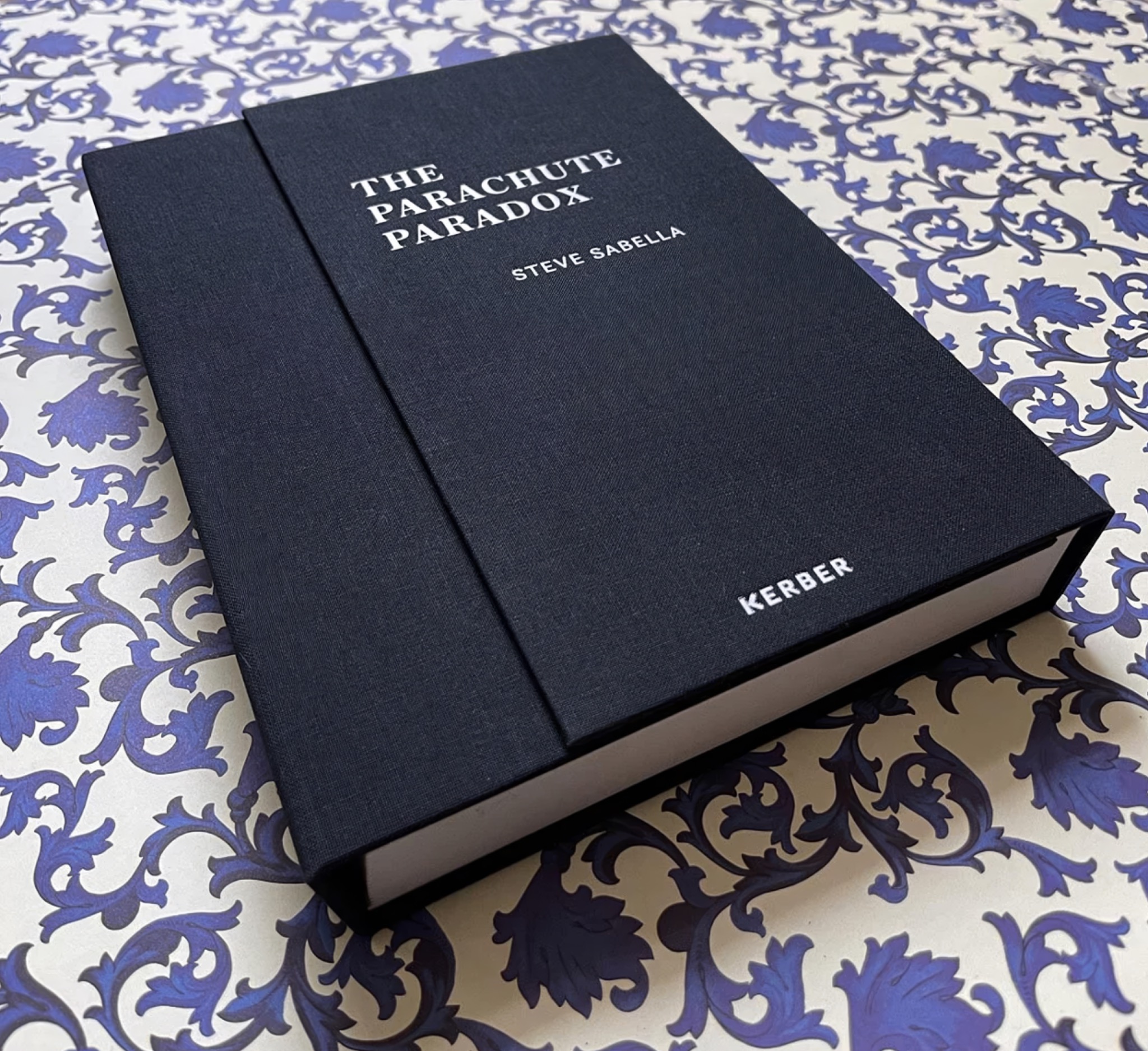
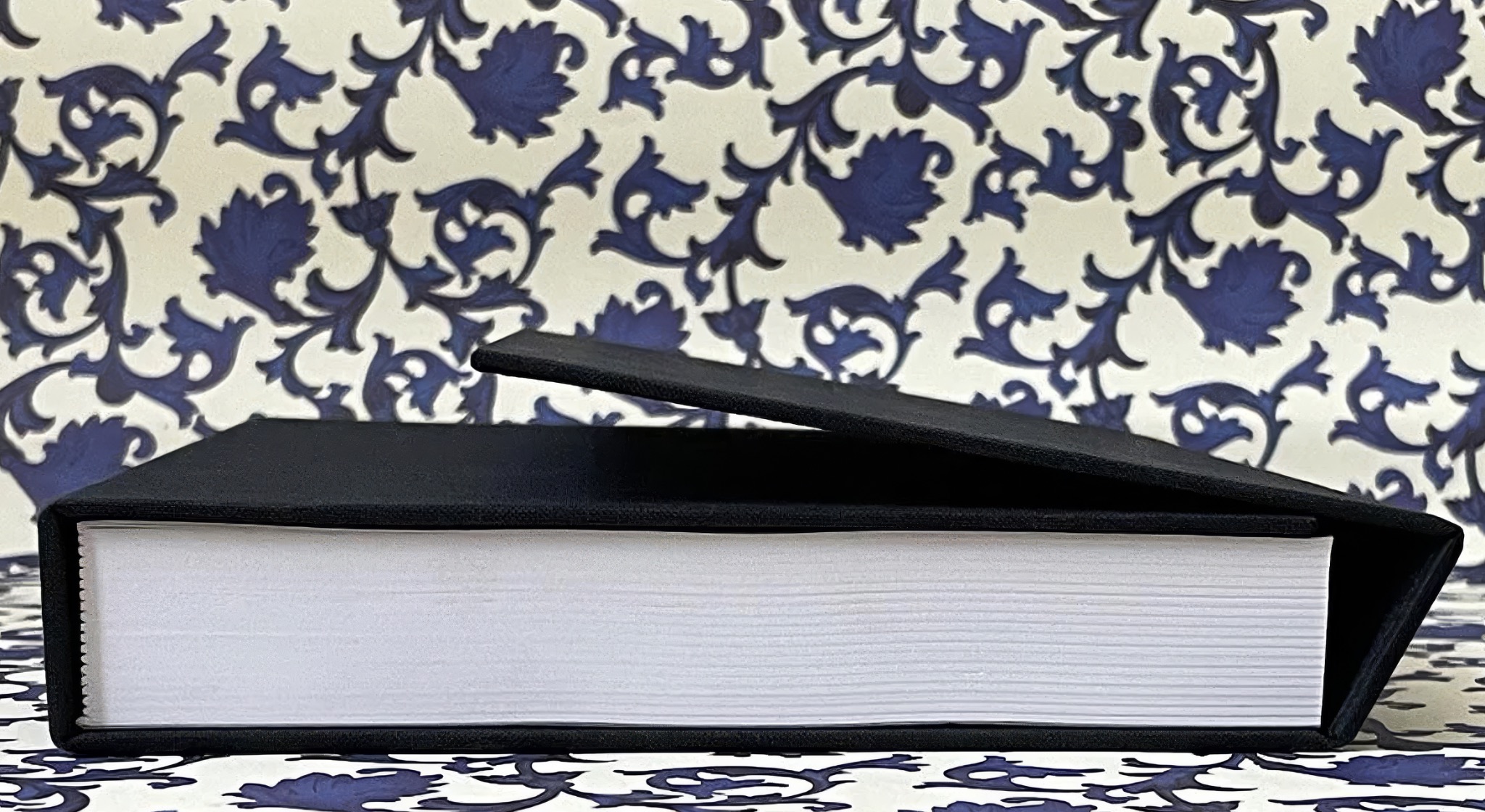
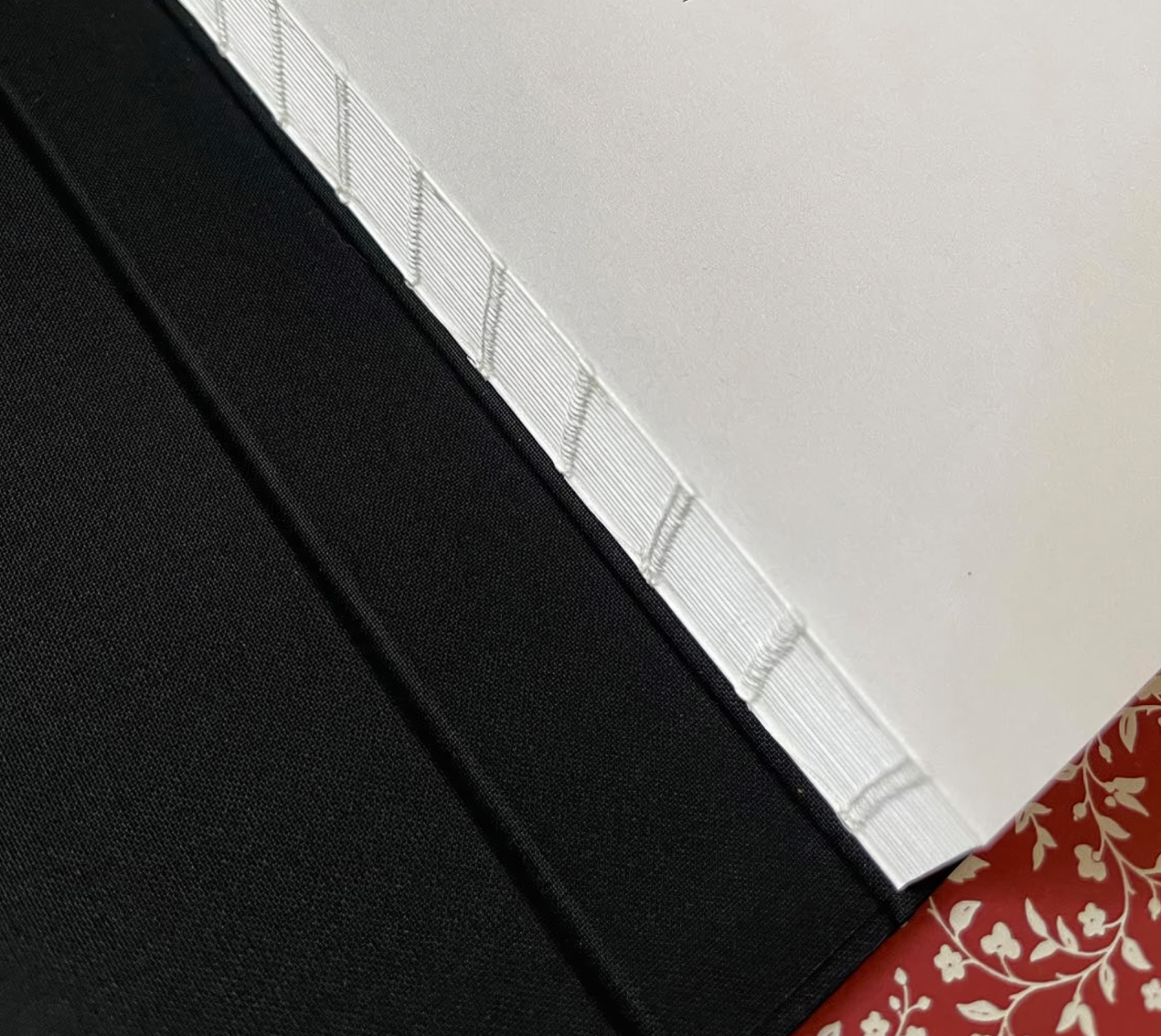
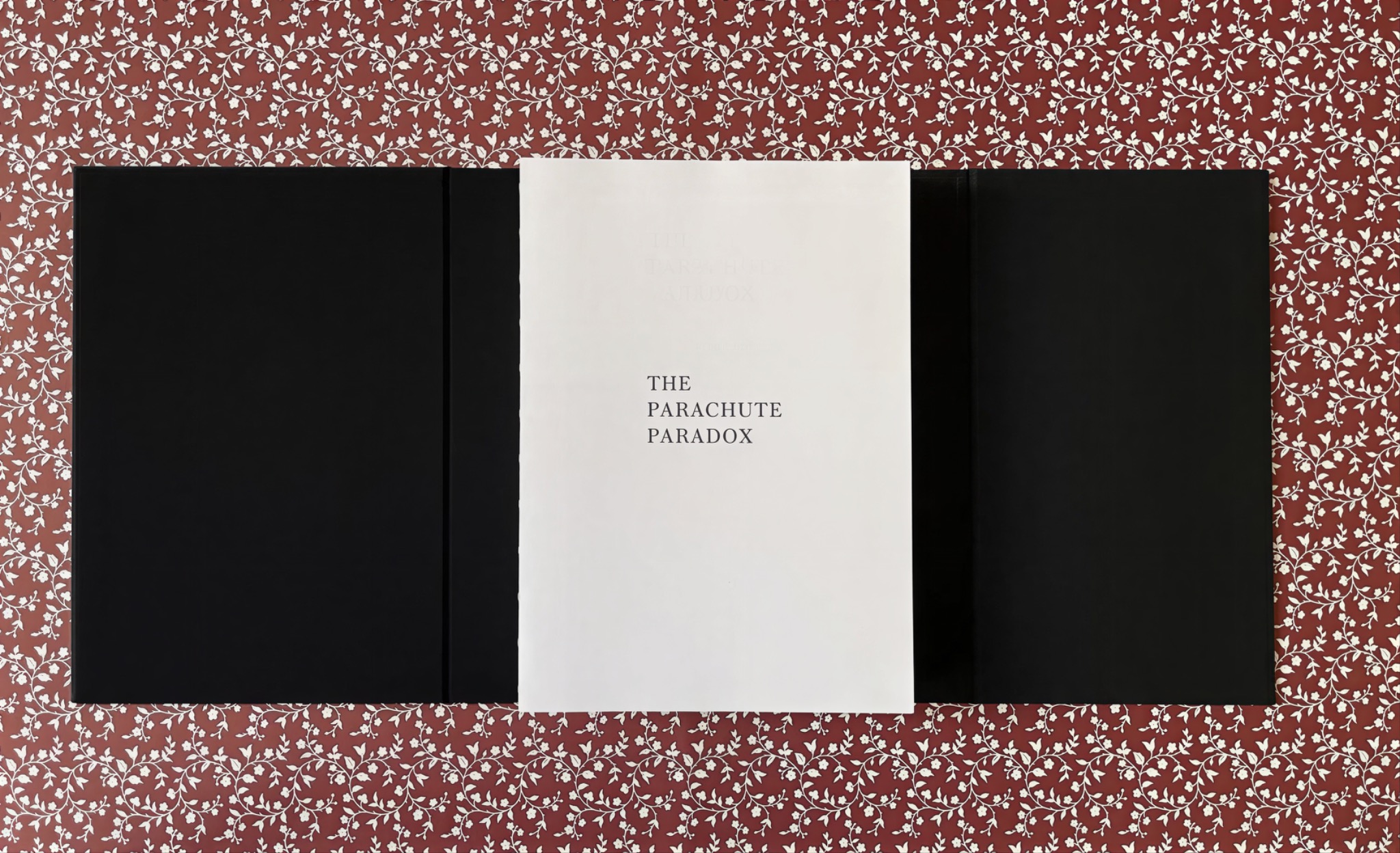
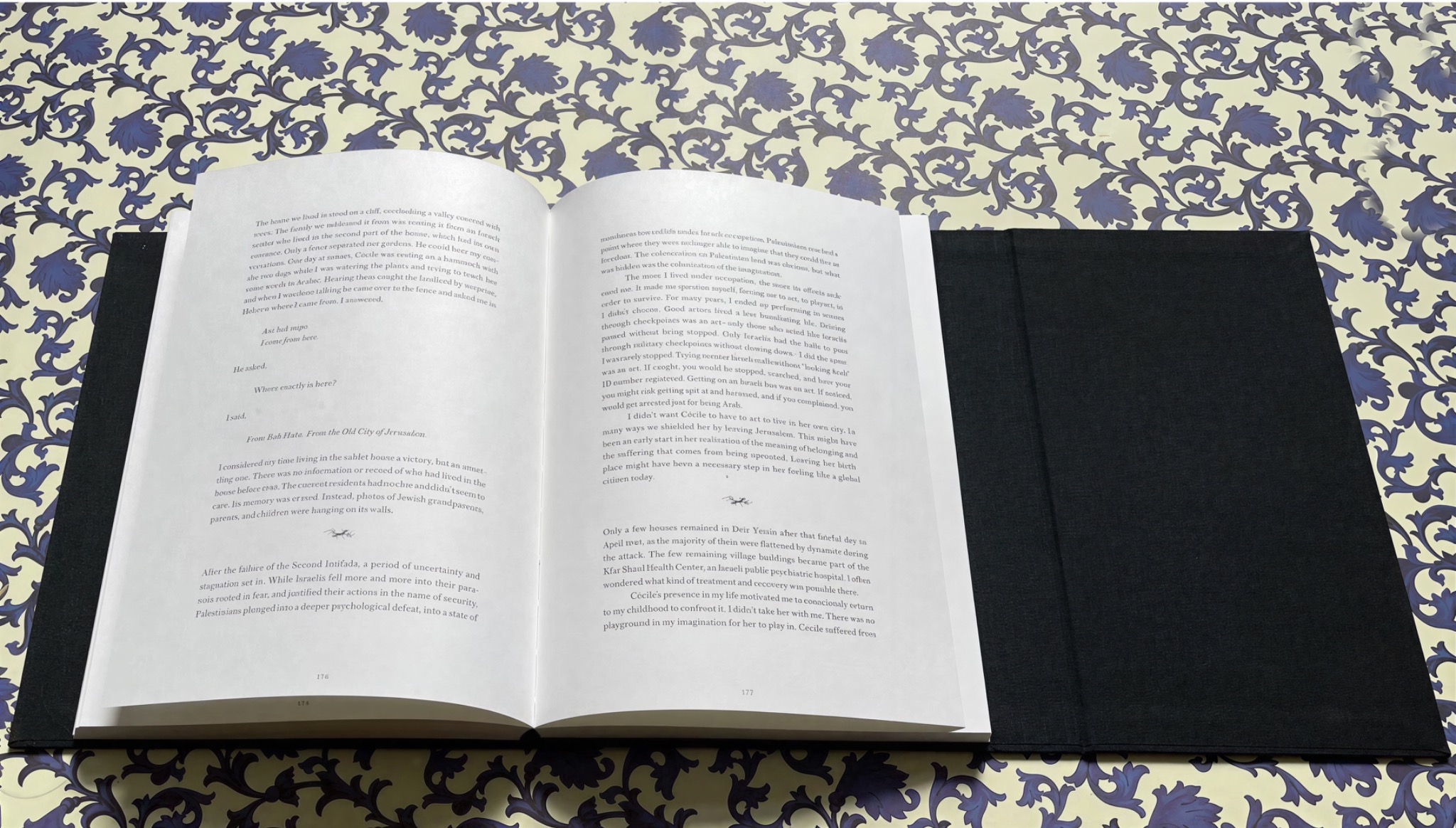
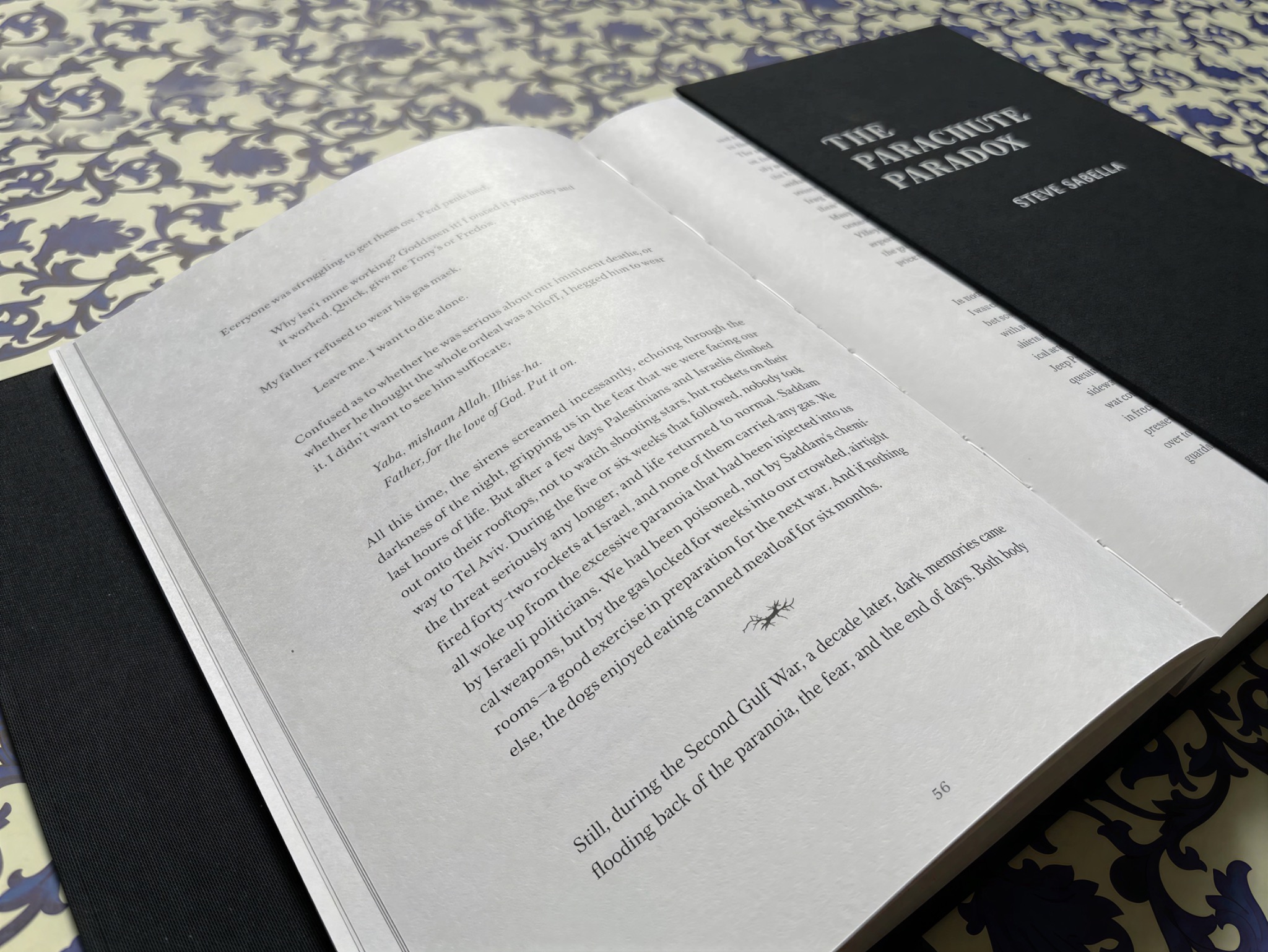
The limited artist’s edition of 1,250 hand-signed copies, plus 150 APs, was a tactile black-cloth book-object with an unfolding double-cover structure and Coptic binding. It sold out and was listed by Kerber Verlag as a bestseller.

A literary memoir by Steve Sabella, born in Jerusalem, Palestine.

A life shaped by occupation. An imagination refusing its borders.

First published by Kerber in 2016, it won the Gold Nautilus
Book Award
for best memoir
and the Eric Hoffer
Book Award.

“…a young man whose freedom does not exist except as an expression of his art, and as an endless love for the girl of his dreams.”
The US Review of BooksEric Hoffer Award winner announcement
Read full quote

“The Parachute Paradox, Steve Sabella, Kerber Verlag – With a clever and intriguing cover, this book eagerly invites the reader to explore its contents. Perhaps the fact that the author is an accomplished artist and photographer explains the volume’s elegant appearance. The book’s content isn’t any less appealing. We learn the story of a Christian boy growing up among Arabs in Israeli-occupied Palestine, drowning in the toxic national and religious ideology that surrounds him. We later discover a young man whose freedom does not exist except as an expression of his art, and as an endless love for the girl of his dreams. We finally encounter a mature, conflicted man pursuing his career in exile and using art as the vehicle of his liberation.

This memoir offers a glimpse into the perpetual Israeli-Palestinian conflict through the eyes of an innocent bystander, who struggles to survive and who learns to live free, if only in his mind. Meanwhile, the Palestinian and the Israeli existence continues to be linked like the parachute jumper and his trainer, who descend in a dangerous tandem toward an insecure future.”

Enter the story
01 / THE STORY

How do you become free when the borders have moved inside you?

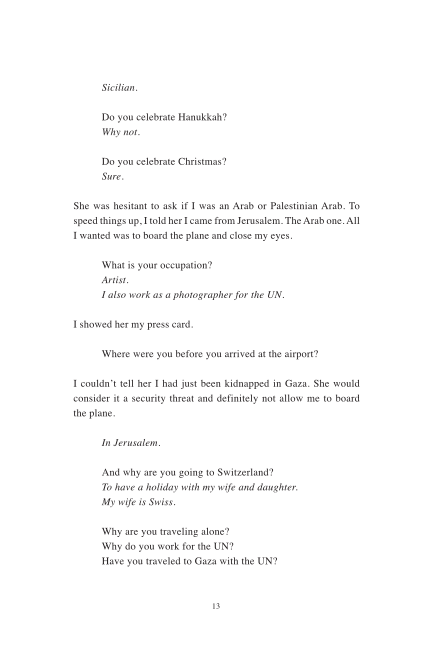
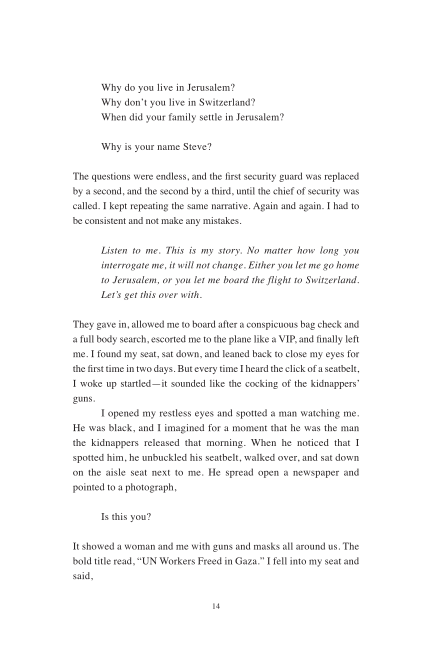
At airport security, Steve Sabella must explain who he is without revealing where he has just been: in the hands of kidnappers in Gaza. Newly released, he is trying to join his wife and daughter in Switzerland. Getting on the plane is another ordeal.

Yet this is also the man who recruits strangers to tell Francesca he loves her. Together, they create a world of improbable surprises within Jerusalem’s Old City. He can invent extraordinary ways to reach the woman he loves, but struggles to find a shared language with their daughter, Cécile. Even at home, it is possible to become a stranger.

Leaving Jerusalem does not end his struggle. In London, and later Berlin, the Palestinian artist confronts a disturbing possibility: the occupation that shaped his life has also shaped the limits of his imagination. His photographs become a place to question those limits. Cutting images apart and piecing them together, he searches for a way to reconstruct a life—not simply represent the one he has inherited.

Intimate, irreverent and alive to its own contradictions, The Parachute Paradox follows a man whose pursuit of freedom unsettles everything he cherishes: his home, his art, his relationships, his understanding of himself.

What does freedom cost when the life you need to change is also the life you love?
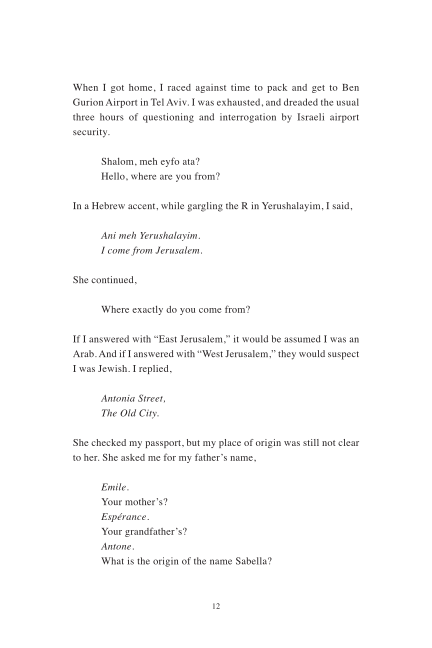
THE OPENING

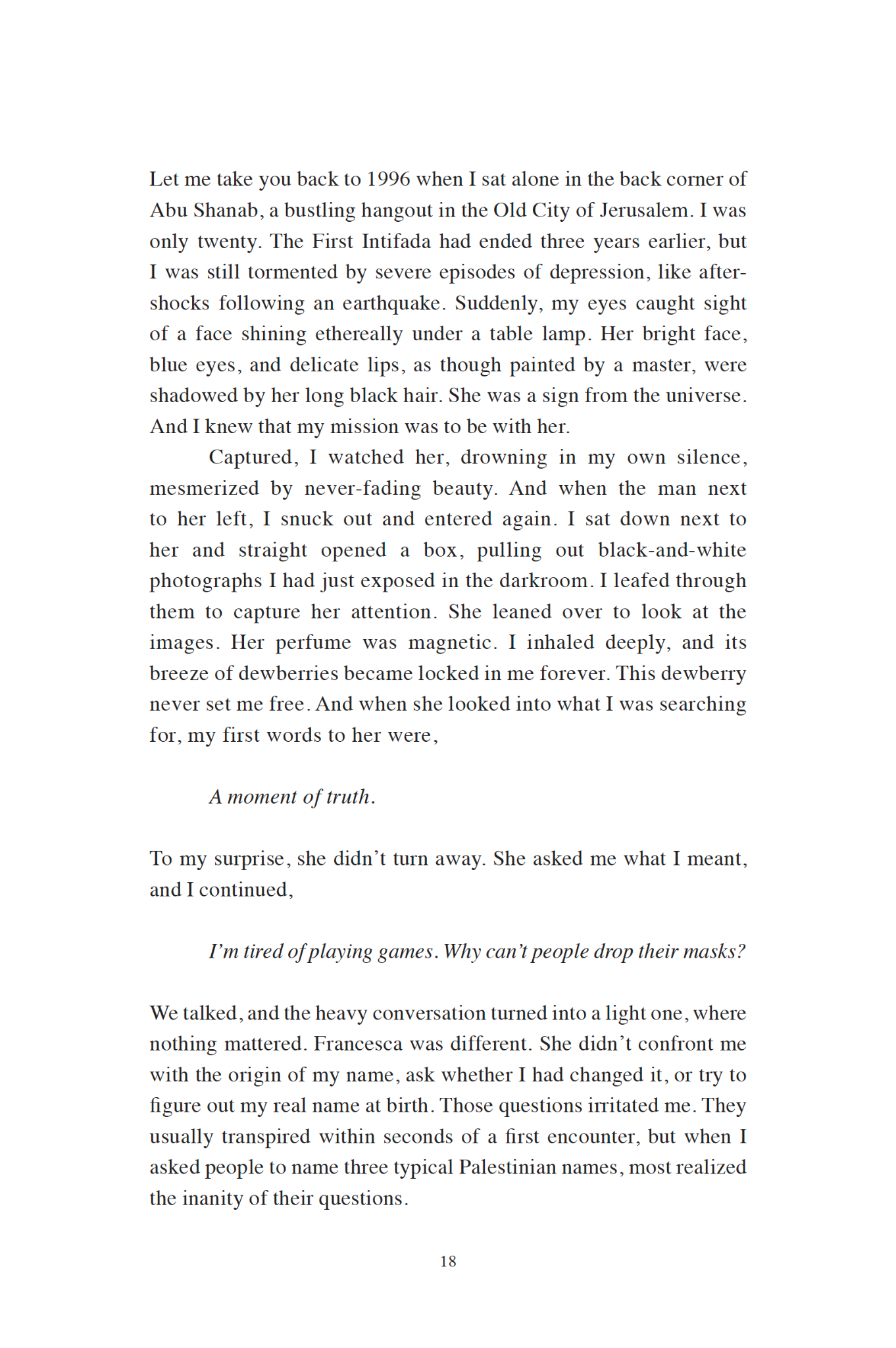
Why is your name Steve?

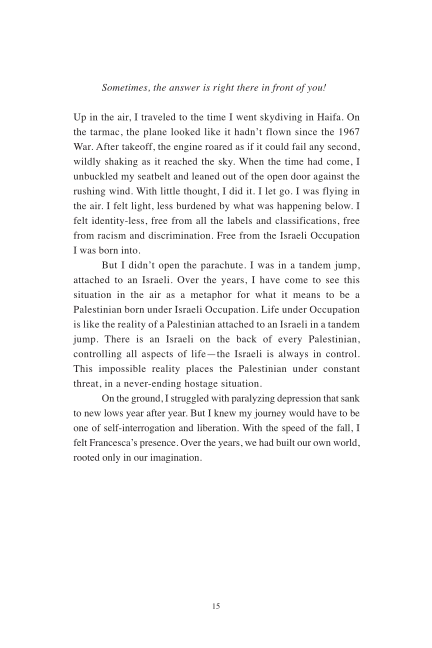
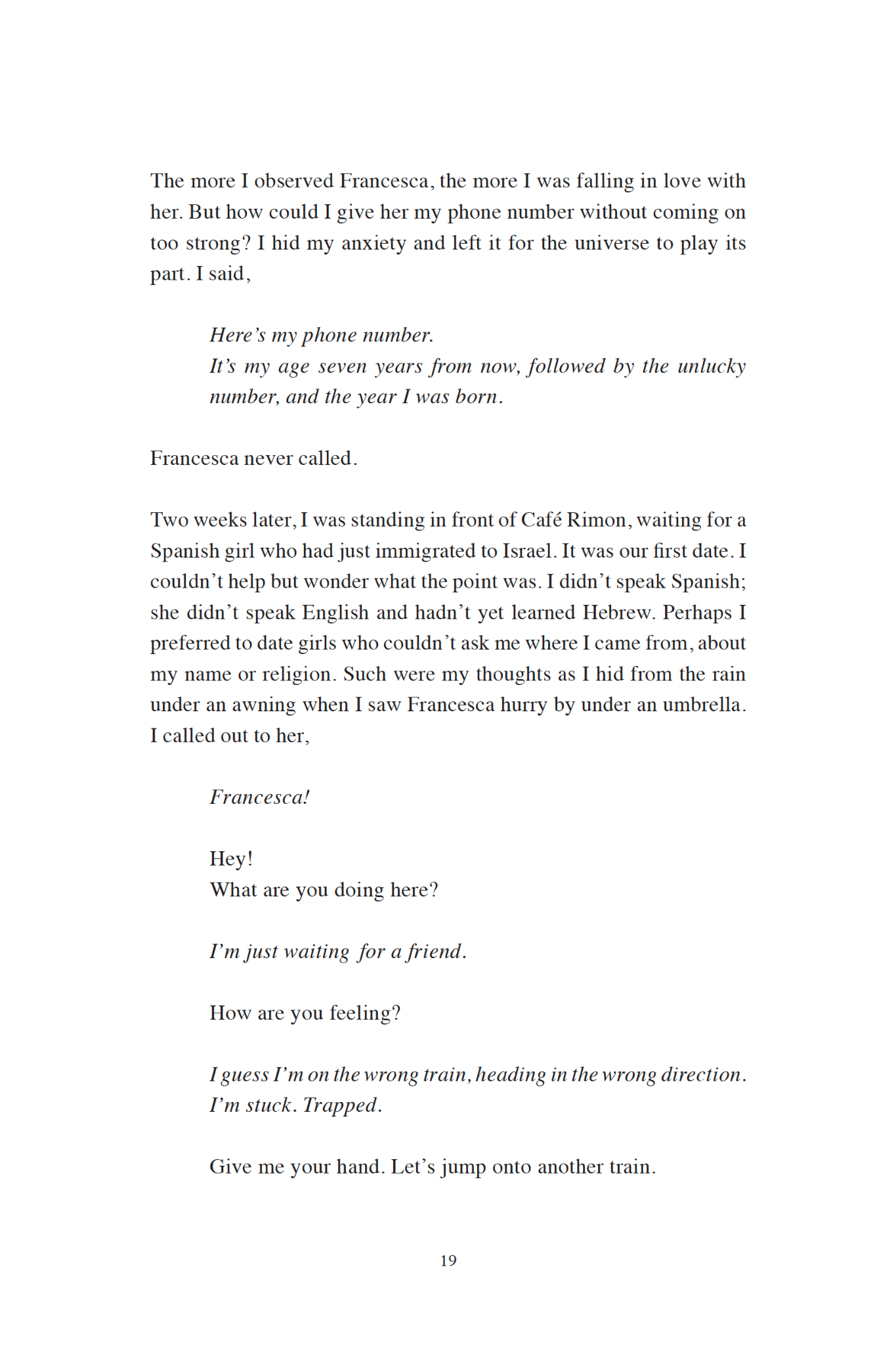
The Parachute Paradox, opening page 12, in the original printed design
Read the opening · PDF ↗
02 / CRITICAL RESPONSE

A voice that
stays with you.

“The number of books about Israel and Palestine published every year can feel oppressive to the average reader. On rare occasions, an original narrative of the conflict, imbued with honesty and sensitivity, is published.”
Joseph DanaThe National · 22 March 2017
Read original review ↗
“The Parachute Paradox is the work of not only a remarkable artist but also an exceptional writer. A must-read for the Palestinian perspective. Thankfully, this memoir is a journey that ends with an epiphany.”
Rod SuchPalestine Chronicle · 3 June 2017Read original review ↗
“Every female reader of the memoir is going to be charmed by Sabella’s courtship of Francesca…”
Ida AudehJerusalem Story · 12 July 2025Read original review ↗
A PERSONAL ENDORSEMENT“part romance, part thriller, part political analysis.”Rabbi Yehuda Sarna, New YorkRead full quote
“Thrilling, challenging, inspiring, thoughtful. The Parachute Paradox is part romance, part thriller, part political analysis. It is thoroughly redemptive and frustrating at the same time. It embraces the reality of a journey of identity and a path to internal peace. Any interested party in the Arab-Israeli conflict must read this firsthand account. In it, Steve tracks all the harmful pitfalls of stereotypes and gives the reader a taste of the kind of spiritual vision necessary to take us beyond the boxes that entrap us.”

Endorsement reproduced on the supplied emaginity book cover.

ARTISTS & THINKERS

A memoir.
A work of art.

“Steve Sabella takes the entire world for an imagination within the imagination—in alliance with 13th century mystics who develop this vision in order to develop their characteristic poetry and art.”
Almút BrucksteinICI Berlin · Book launch
Read the full text ↗
“Sabella writes not only as a novelist but also as a choreographer, dancing with words and images. He infuses this captivating book with exceptional cinematographic energy.”
Nicoles YounessProfessor of History of Art | Beirut
“A thought-provoking, compelling and beautifully crafted memoir. From the brilliant metaphor in the title to the last page, this book is an inspirational work of art.”
Joanna BarakatPalestinian Artist | Dubai
“Sabella’s honest and intimate reflections on his experiences of displacement and exile provide readers with a powerful and moving insight.”
Karin Adrian Von RoquesCurator & Art Historian | Germany
Read full quote
“In this book, Sabella describes his growing up in Jerusalem and his journey of liberation. The memoir has been praised for its courageous and thought-provoking storytelling, as Sabella's honest and intimate reflections on his experiences of displacement and exile provide readers with a powerful and moving insight. His story is one of hope and courage, demonstrating the strength to survive in the face of adversity. The Parachute Paradox is an inspiring read that will leave its readers with a newfound appreciation for the power and resilience of the human spirit.”

A PALESTINIAN LITERARY READING

“The Parachute Paradox offers narrative storytelling of the life of the Jerusalemite artist and his experiences under Israeli occupation. It proposes a subject that is unprecedented in Palestinian literature: the liberation of the self and the homeland through the liberation of the imagination.”
Mohammed Al-Asaad (1944–2021)Palestinian poet, novelist and criticAl-Araby Al-Jadeed, London

Al-Asaad was one of the prominent writers of Al-Araby Al-Jadeed’s cultural section.

Al-Asaad later translated an excerpt from the memoir into Arabic.

Read the original Arabic review ↗

03 / THE LIFE OF A BOOK

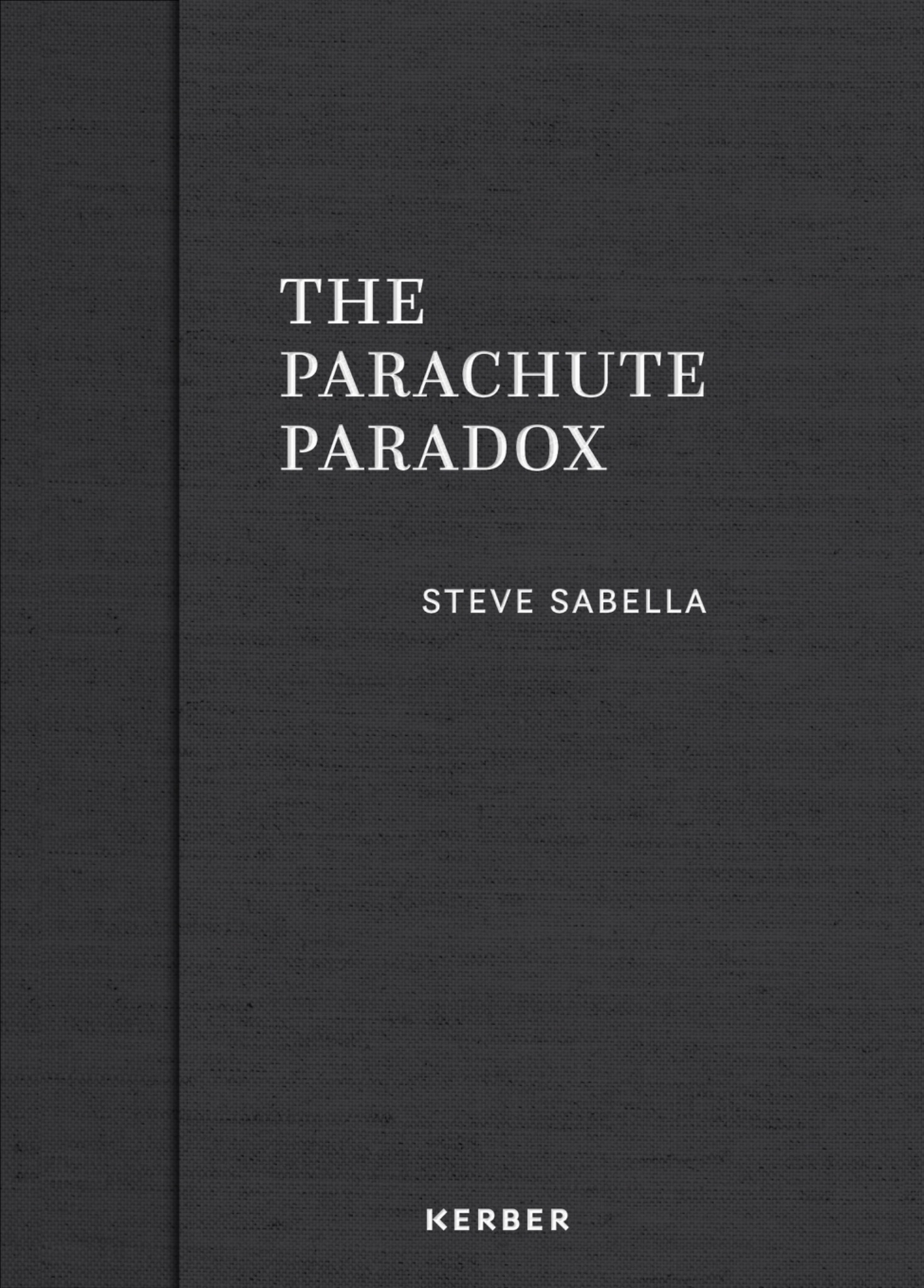
The original black cloth cover of The Parachute Paradox, published by Kerber in 2016.
The original artist’s editionKerber, 2016

Then 2020 came.

In a year of social distancing, a new idea came to light. I decided to give The Parachute Paradox a second life under my own imprint, emaginity, using KDP and IngramSpark to bring it directly to readers.

I thought there was only a missing comma to put right.

But when I started reading again, I felt the sentences could be better. One led to another. What I had imagined as a small correction became a return to every sentence, every word, and every comma.

The stories remained the same, but the narration began to change. The story no longer controlled me. With distance, I could shape its telling without distorting it—fine-tuning the language until every detail contributed to the composition. As in my art, the vision and the voice remained wholly my own.

Then, one evening, I asked my sixteen-year-old daughter, Cécile, about the placement of a comma.

“It depends,”

she said.

Her reply prompted me to invite her into my creative space. Unexpectedly, we began editing the chapters of my life and hers in tandem.

Finally, father and daughter were in dialogue.

Through this collaboration, another possibility emerged. Drawn from the closing lines of each paragraph in The Parachute Paradox, passages began to tell a different story when woven together. They became the foundation for a new book, The Endings.

I had set out to republish a book. I had not expected to return to its pages with my daughter.

And through that return, the book’s deeper purpose came into focus. What had been unfolding through its pages all along could finally be named:

Decolonizingthe Imagination.

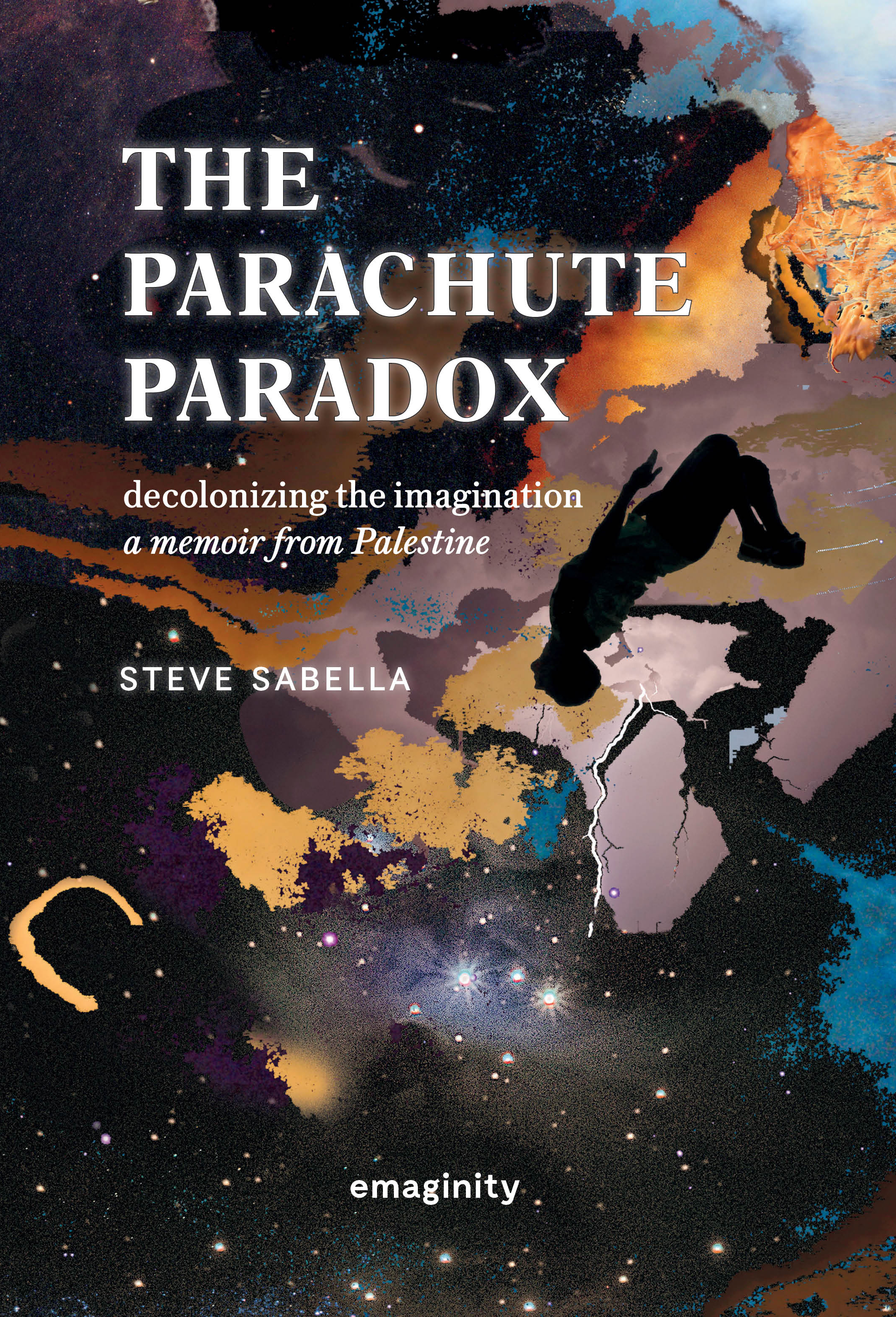
The revised edition’s full cover: a falling figure, stars and a richly coloured photographic collage, with the subtitle Decolonizing the Imagination.

Revised second edition · emaginity, 2021

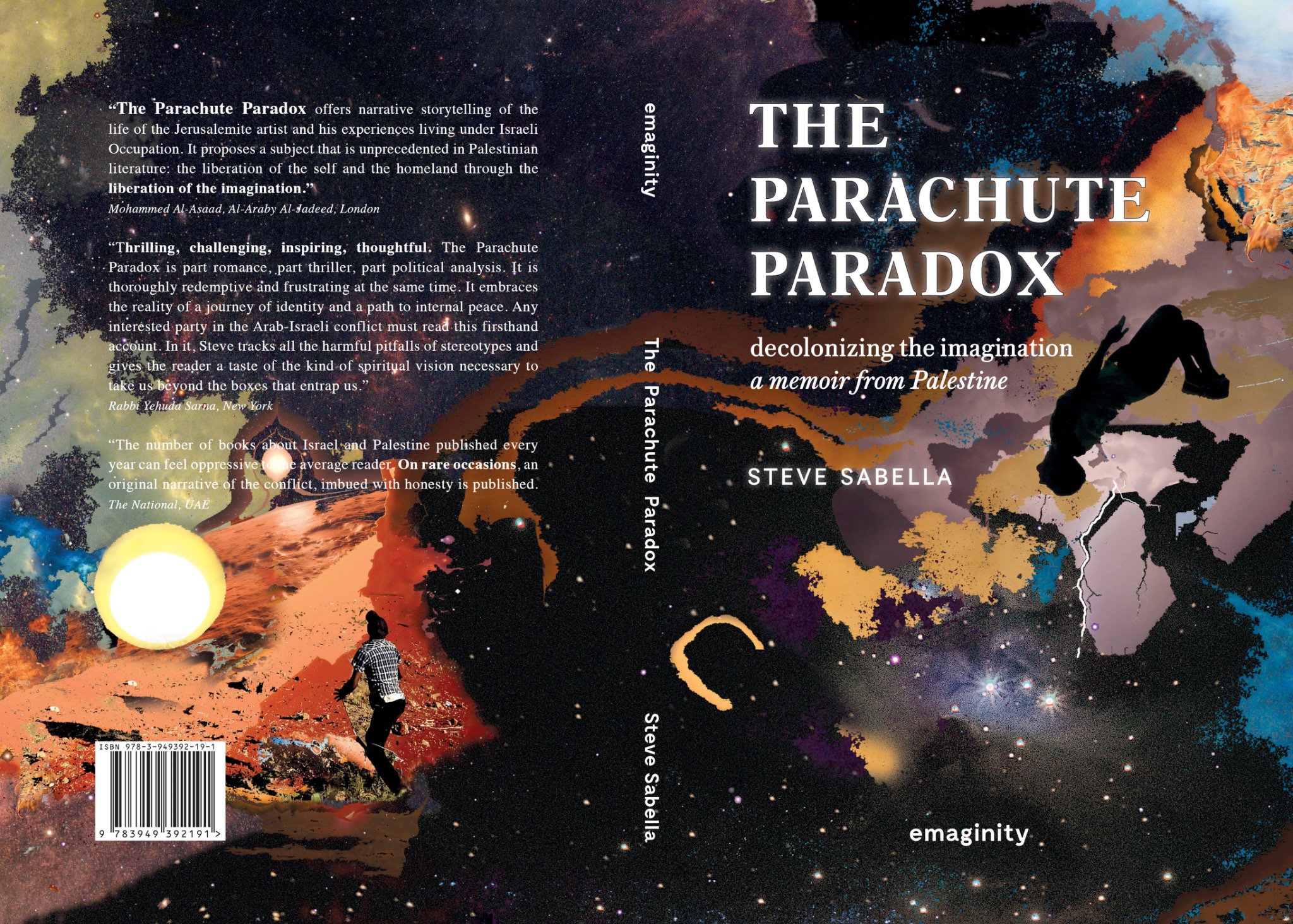
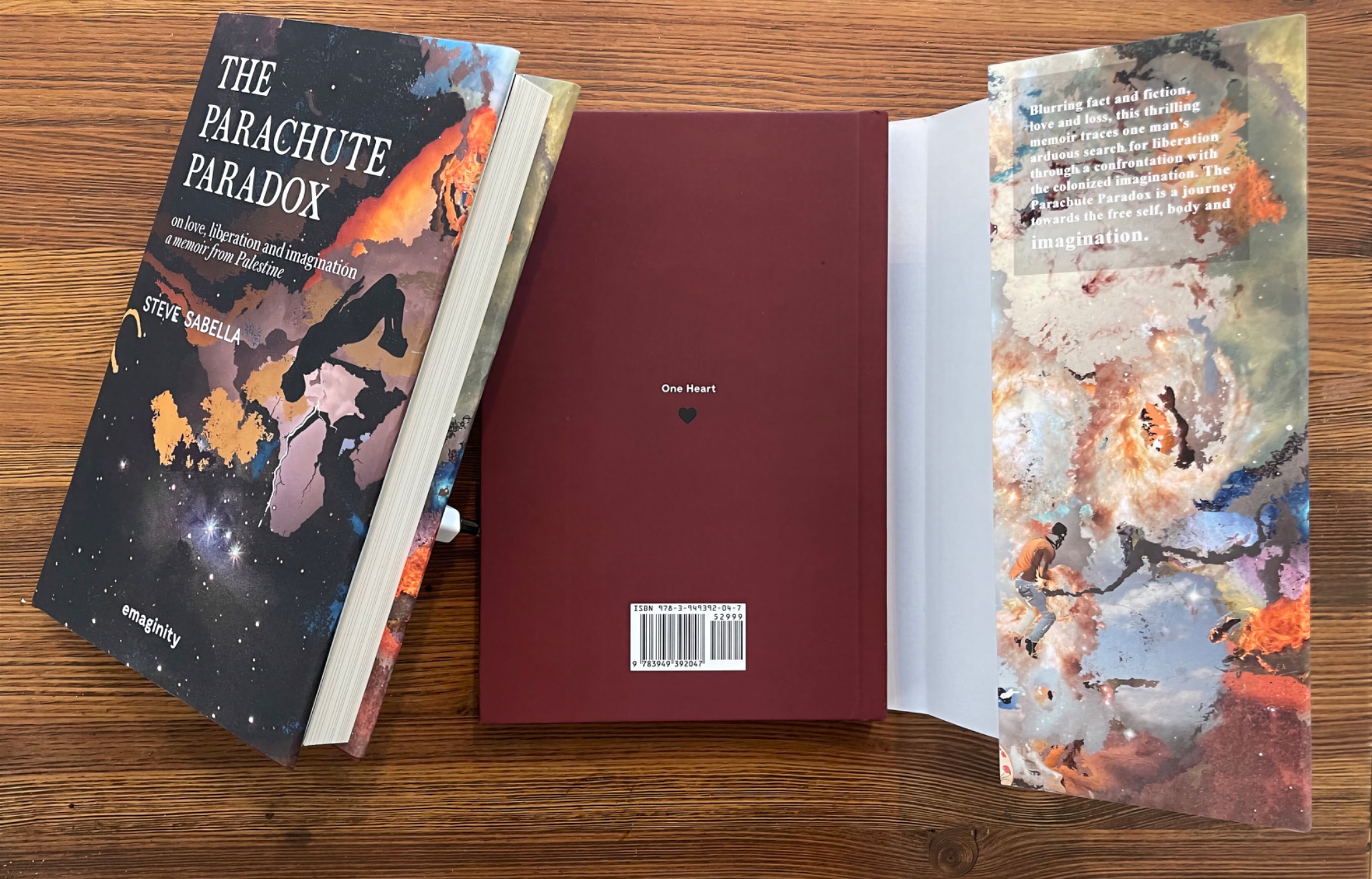
The complete cover spread of the revised edition, showing the artwork across the back cover, spine and front cover.
The complete cover spread

In 2021, the revised second edition of The Parachute Paradox appeared under emaginity.

Its structure had changed. The chapters were no longer numbered forward from 1 to 15, but backward:

  1. 15
  2. 14
  3. 13
  4. 12
  5. 11
  6. 10
  7. 9
  8. 8
  9. 7
  10. 6
  11. 5
  12. 4
  13. 3
  14. 2
  15. 1
  16. 0

With the addition of Chapter Zero, the memoir acquired the rhythm of a countdown. The numbers descend like a ticking bomb through a life shaped by wars, suicide bombings, checkpoints and sudden rupture. Like the parachutists of its title, people remain suspended in the air, descending toward an impact they cannot fully see. When zero finally hits, it is both detonation and reset: an ending, and the possibility of beginning again.

The book was not simply revised.It was reset.

The revised edition as a physical book, with its complete illustrated jacket unfolded beside the red cloth volume

04 / A continuing life

The book did not
stop in 2016.

Published. Rewritten. Read again.
Re-entered in new contexts.

2016

Four cities.
Four conversations.

The first edition entered the world through a series of conversations rather than one conventional launch.

Kuwait

Contemporary Art Platform ↗
With Palestinian poet, writer and critic Mohammed Al-Asaad.

Berlin

ICI Berlin Institute for Cultural Inquiry ↗
With Almút Sh. Bruckstein, founder of Taswir Projects, and Alya Sebti, then Director of ifa-Galerie Berlin.

Dubai

Alserkal Avenue
With Rebecca Anne Proctor.

London

SOAS University of London
With Dr Siba Aldabbagh and Prof. Wen-Chin Ouyang.

That same year, an Arabic excerpt from the memoir was published by Al-Araby Al-Jadeed, translated by Mohammed Al-Asaad.

The writing continued to cross languages. In 2022, Stadtsprachen published Das Fallschirm-Paradox, an excerpt translated into German by Joey Bahlsen.

2021 / A return to the text

One magazine. Two reviews.
Five years apart.

2016 — First reading

“Perhaps the most impressive book I’ve ever read about the Palestinian-Jewish conflict.”

Moors Magazine, The Netherlands
Translated from Dutch

Read full review →
Five years later

2021 — Second reading

“The stories have remained the same, but the book has nevertheless become subtly different. I must confess: it gripped me again, and this time I read it all the way through once more.”

Moors Magazine — translated from Dutch

Read full review →

The same critic. Five years apart.
A revised telling, read all the way through again.

2022

The story is
selected again.

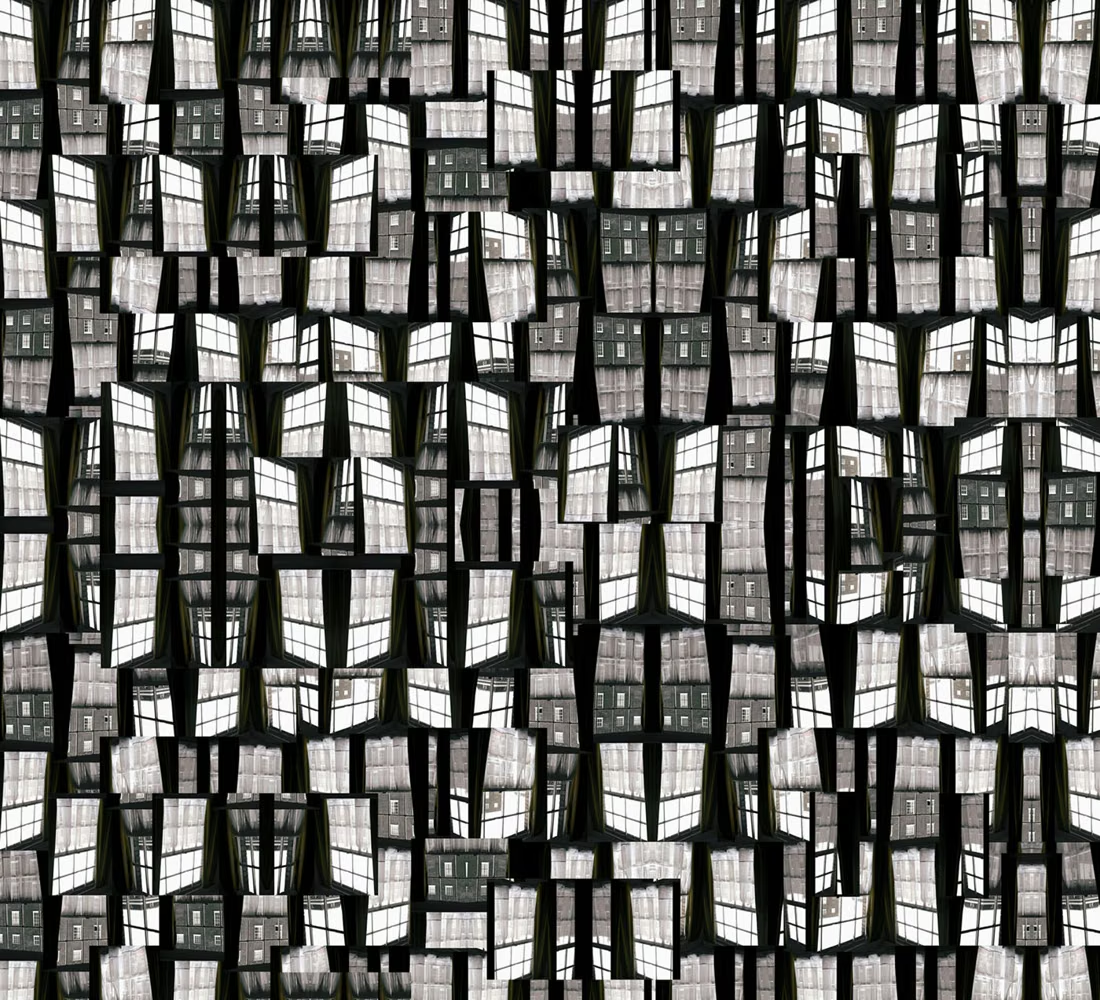
Steve Sabella, In Exile 3: a photographic composition of fractured windows, featured in The Markaz Review
Steve Sabella, In Exile 3
Featured in The Markaz Review

In 2022, The Markaz Review published editor-selected excerpts from The Parachute Paradox, opening with the airport interrogation that now begins the revised reading copy.

Read the selected excerpts →

2025 / GENEVA GRADUATE INSTITUTE | SWITZERLAND

Into a larger
conversation.

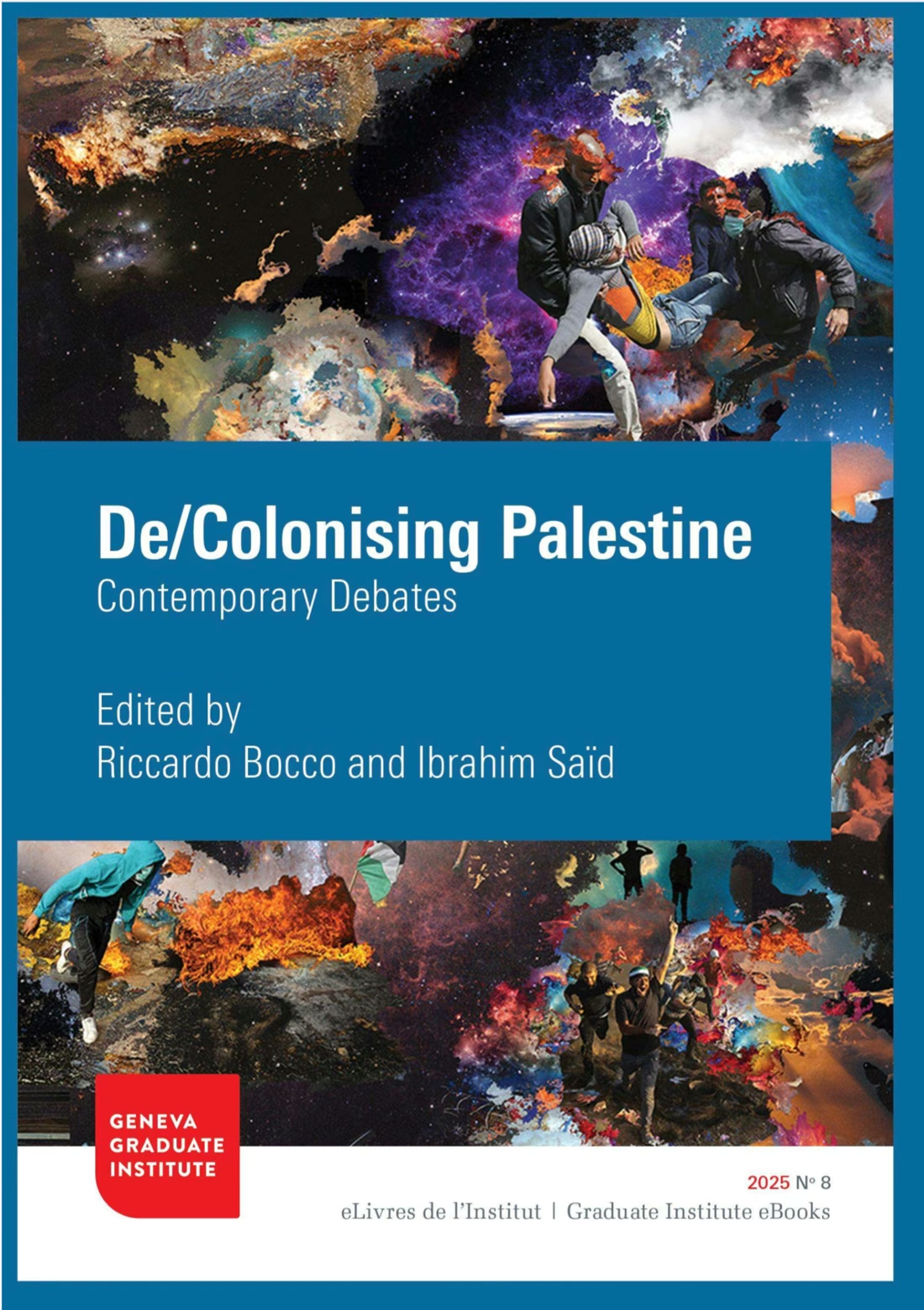
Actual cover of De/Colonising Palestine: Contemporary Debates, edited by Riccardo Bocco and Ibrahim Saïd, featuring Steve Sabella’s The Great March of Return

In 2025, The Parachute Paradox | Decolonizing the Imagination became Chapter Fourteen of the Geneva Graduate Institute’s nearly 700-page De/Colonising Palestine: Contemporary Debates, edited by Riccardo Bocco and Ibrahim Saïd.

Sabella’s art also became part of the visual architecture of the volume: The Great March of Return appears on the cover, while works including Elsewhere, No Man’s Land, 38 Days of Re-Collection, Everland, Exit and SETTLEMENT | Six Israelis & One Palestinian accompany its five sections.

The volume brings Sabella into conversation with contributors including Francesca P. Albanese and Lex Takkenberg, Ilan Pappé and Alaa Tartir, among many others.

“He highlights cultural resistance through Palestinian traditions like embroidery and emphasises the transformative power of art and storytelling in envisioning freedom.”

Riccardo Bocco & Ibrahim Saïd
Editors, De/Colonising Palestine: Contemporary Debates

05 / IN READERS’ WORDS

A book becomes
someone’s experience.

Individual encounters, in readers’ own words.

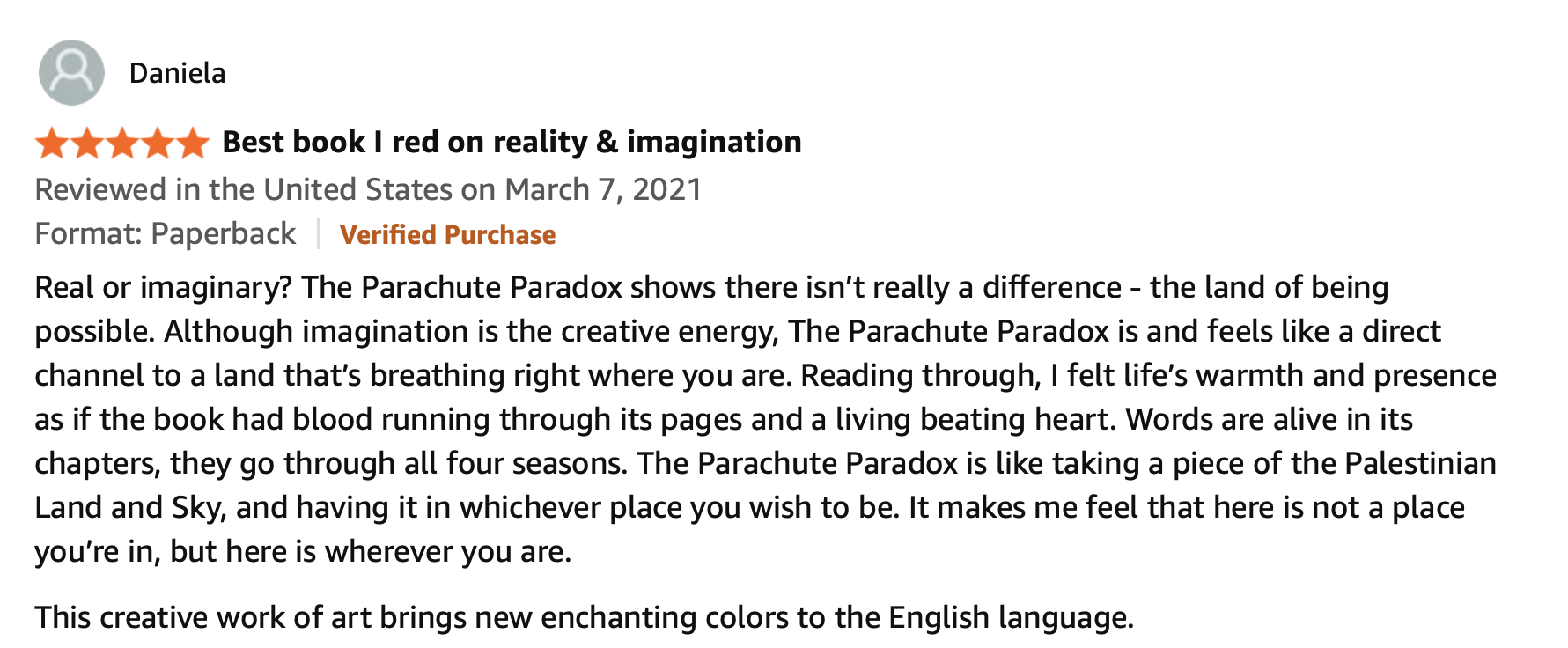
Original Amazon review by Daniela, United States, March 7, 2021, marked Verified Purchase. It includes: as if the book had blood running through its pages and a living beating heart.
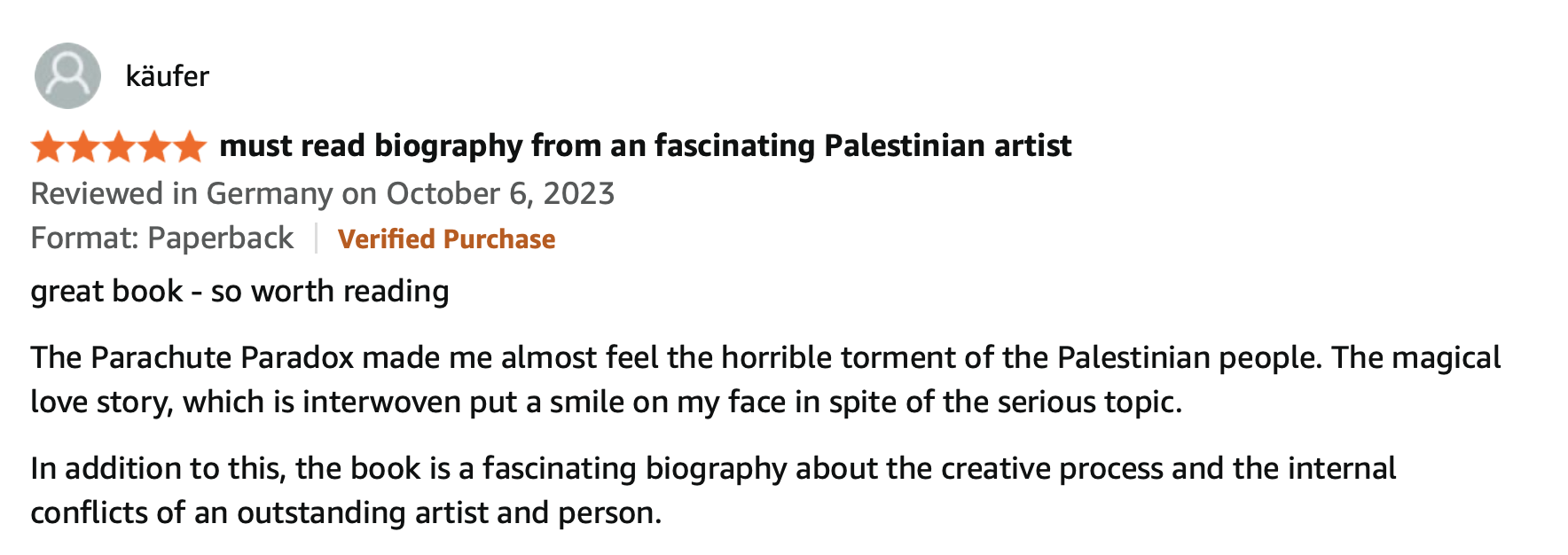
Original Amazon review by käufer, Germany, October 6, 2023, marked Verified Purchase. The review describes the magical love story putting a smile on the reader’s face.
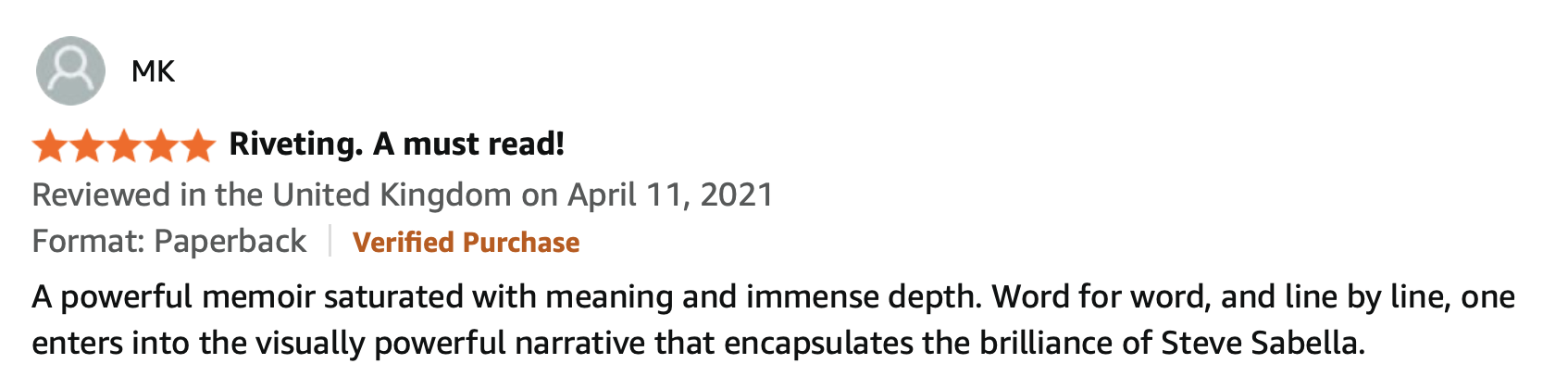
Original Amazon review by MK, United Kingdom, April 11, 2021, marked Verified Purchase, titled Riveting. A must read! It describes a memoir saturated with meaning and immense depth.
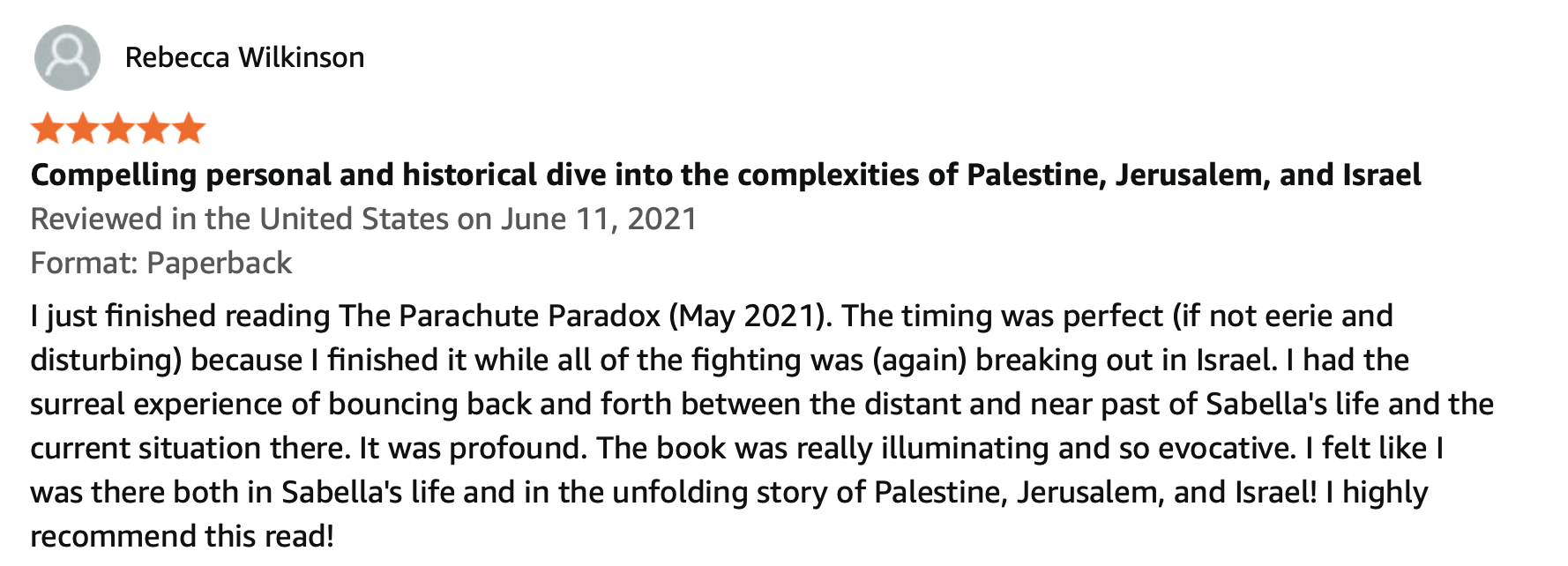
Original Amazon review by Rebecca Wilkinson, United States, June 11, 2021. The review describes reading the memoir in May 2021 and calls it really illuminating and so evocative.
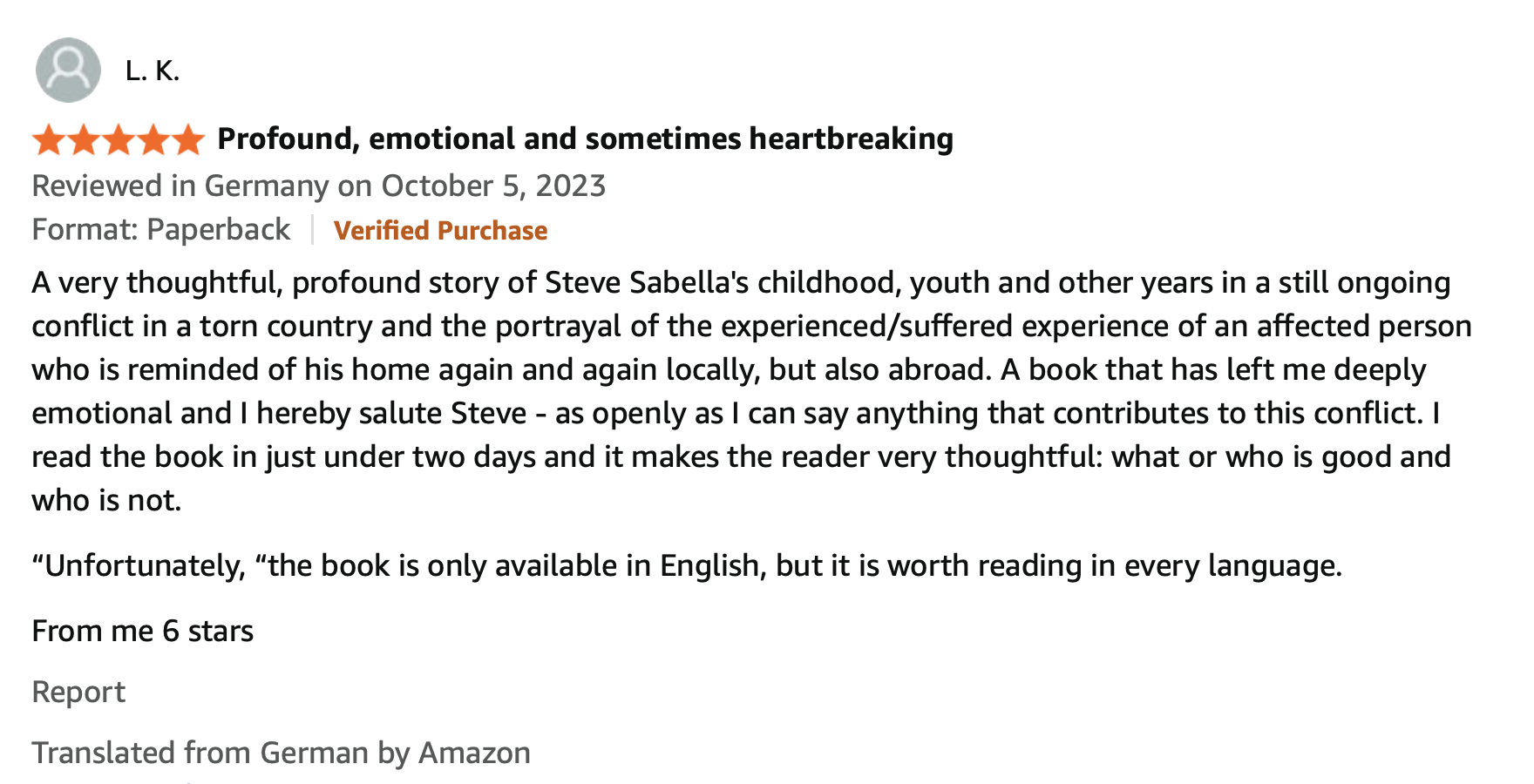
Original Amazon review by L. K., Germany, October 5, 2023, marked Verified Purchase and Translated from German by Amazon. It says the book is worth reading in every language. All original wording and punctuation are preserved.
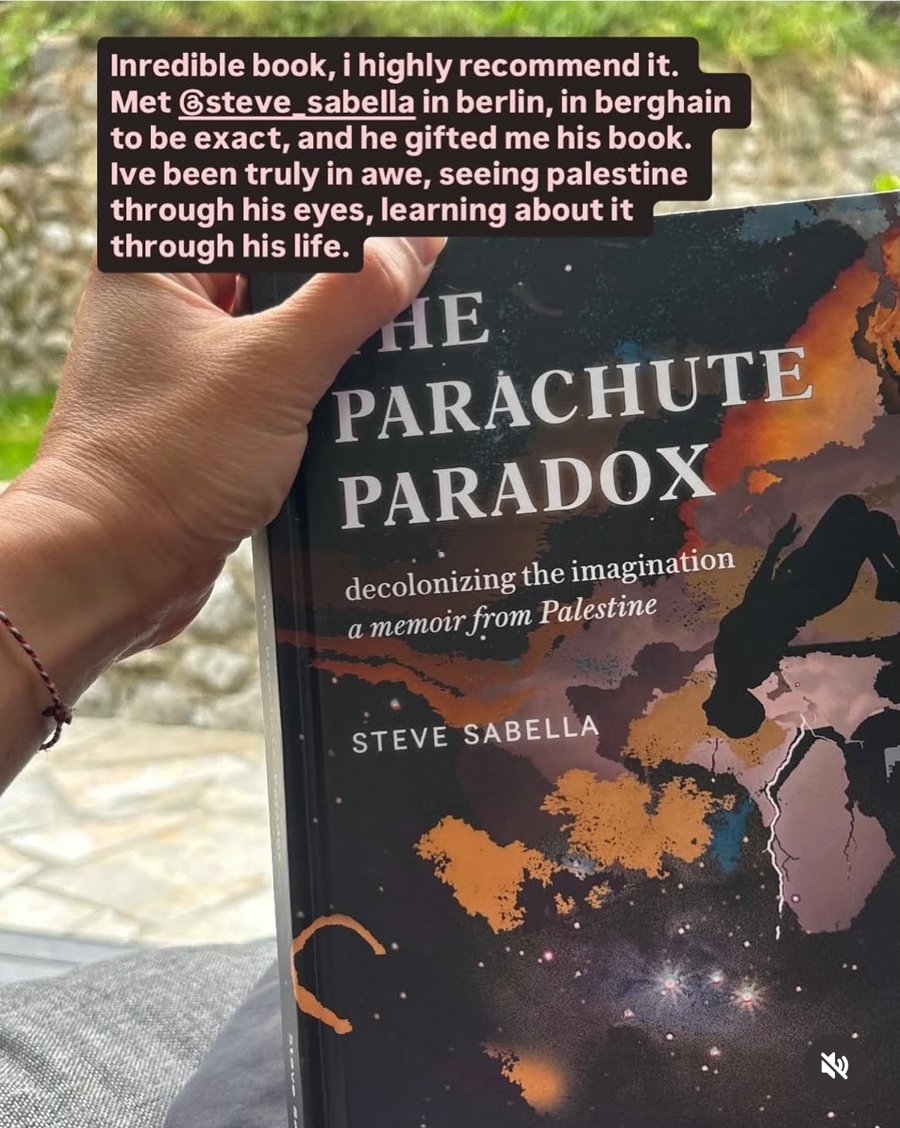
Original Instagram story showing a reader holding The Parachute Paradox outdoors, with their unedited message about meeting Steve in Berlin and seeing Palestine through his life.
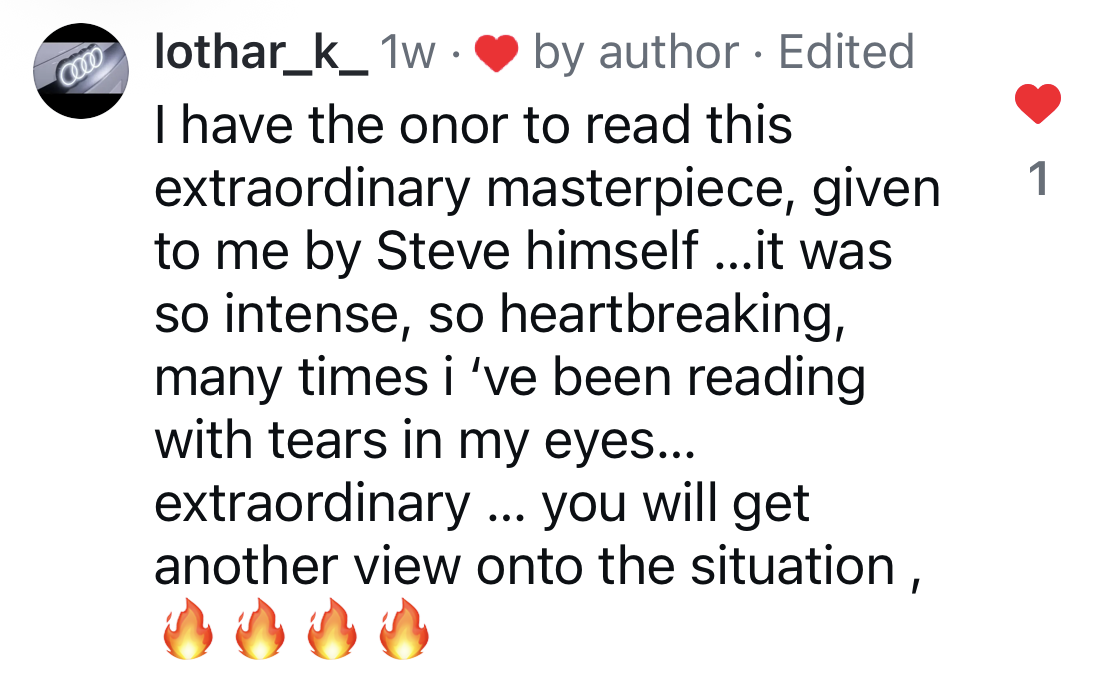
Original Instagram comment by lothar_k_ describing reading with tears in their eyes; the username, heart reactions, Edited label, emojis and original spelling remain visible.
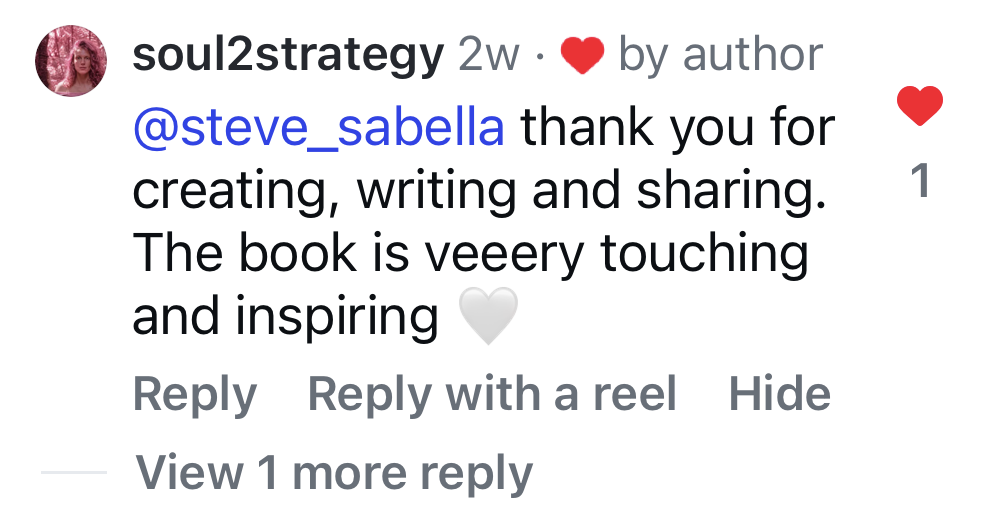
Original Instagram comment by soul2strategy thanking Steve for creating, writing and sharing, and saying the book is veeery touching and inspiring. Reactions and reply controls remain visible.
06 / THE AUTHOR

Steve
Sabella

Jerusalem, 1975
Berlin, since 2010

Steve Sabella is an artist and author born in Jerusalem, Palestine. For more than three decades, his work has asked what images do to us — and what becomes possible when we begin to free ourselves from them.

Born in Jerusalem in 1975, holding Swiss nationality and based in Berlin since 2010, he works across photography, collage, installation and writing. His practice examines how images shape memory, place and political imagination, often dismantling and reconstructing photographic reality into new visual worlds.

France has been a recurring part of this artistic trajectory. Sabella exhibited at Les Rencontres de la photographie in Arles in 2013; his work was presented at the Maison Européenne de la Photographie and the Institut du Monde Arabe during the first Biennial of Arab Photography in 2015; and in 2018, Steve Sabella: Evolution was presented at Art Paris at the Grand Palais. His work is held in the permanent collection of the Institut du Monde Arabe.

Click here to read full biography

His work is also held in collections including the British Museum, London; Mathaf: Arab Museum of Modern Art, Doha; Ars Aevi Museum of Contemporary Art, Sarajevo; and the Barjeel Art Foundation, Sharjah. In 2010, he was one of the artists commissioned for Told, Untold, Retold, the inaugural exhibition of Mathaf.

The Ellen Auerbach Award for Photography, awarded by Berlin’s Akademie der Künste in 2008, led to the monograph Steve Sabella: Photography 1997–2014, published by Hatje Cantz in 2014. That same year, the International Center for Photography Scavi Scaligeri in Verona presented Archaeology of the Future, a retrospective spanning his artistic practice.

Sabella is the author of The Parachute Paradox | Decolonizing the Imagination. First published by Kerber in 2016, it won the Gold Nautilus Book Award for Memoir and the Eric Hoffer Book Award for Memoir. In 2025, The Parachute Paradox | Decolonizing the Imagination became Chapter Fourteen of the Geneva Graduate Institute publication De/Colonising Palestine: Contemporary Debates.

His second book, The Artist’s Curse | The Artist’s Cure (2023), turns toward the conditions of a creative life: ambition, money, recognition, institutions and self-belief. At the Barenboim–Said Akademie in Berlin, he teaches The Art Practice | From Vision to Action.

In 2026, the Einstein Forum in Potsdam presents his solo exhibition The Liberated Image, continuing an inquiry that runs through the memoir: how can an image cease to be captive to a single history, function or interpretation?

The Parachute Paradox gave that journey its language. The Liberated Image carries it forward. At the centre of both lies Sabella’s enduring conviction: imagination is our last free territory.

Explore the full practice, publications and CV ↗

07 / NEW LANGUAGES

The art has crossedthese borders.

The memoir has yet
to appear in these languages.

A first French edition

France is the principal proposal: a new literary encounter in a country where Sabella’s work already has a substantial institutional presence. The Institut du Monde Arabe in Paris holds 20 works from his practice, including works from In Exile and Everland, alongside The Great March of Return.

Spanish and Italian editions are also being explored. In Italy, this would extend an artistic relationship with the country that includes Sabella’s 2014 retrospective at the Centro Internazionale di Fotografia Scavi Scaligeri in Verona, Archaeology of the Future.

WorkThe Parachute Paradox
GenreLiterary memoir
Original languageEnglish
LengthApproximately 83,000 words
RightsFrench, Spanish and Italian translation rights available.All rights controlled by the author.
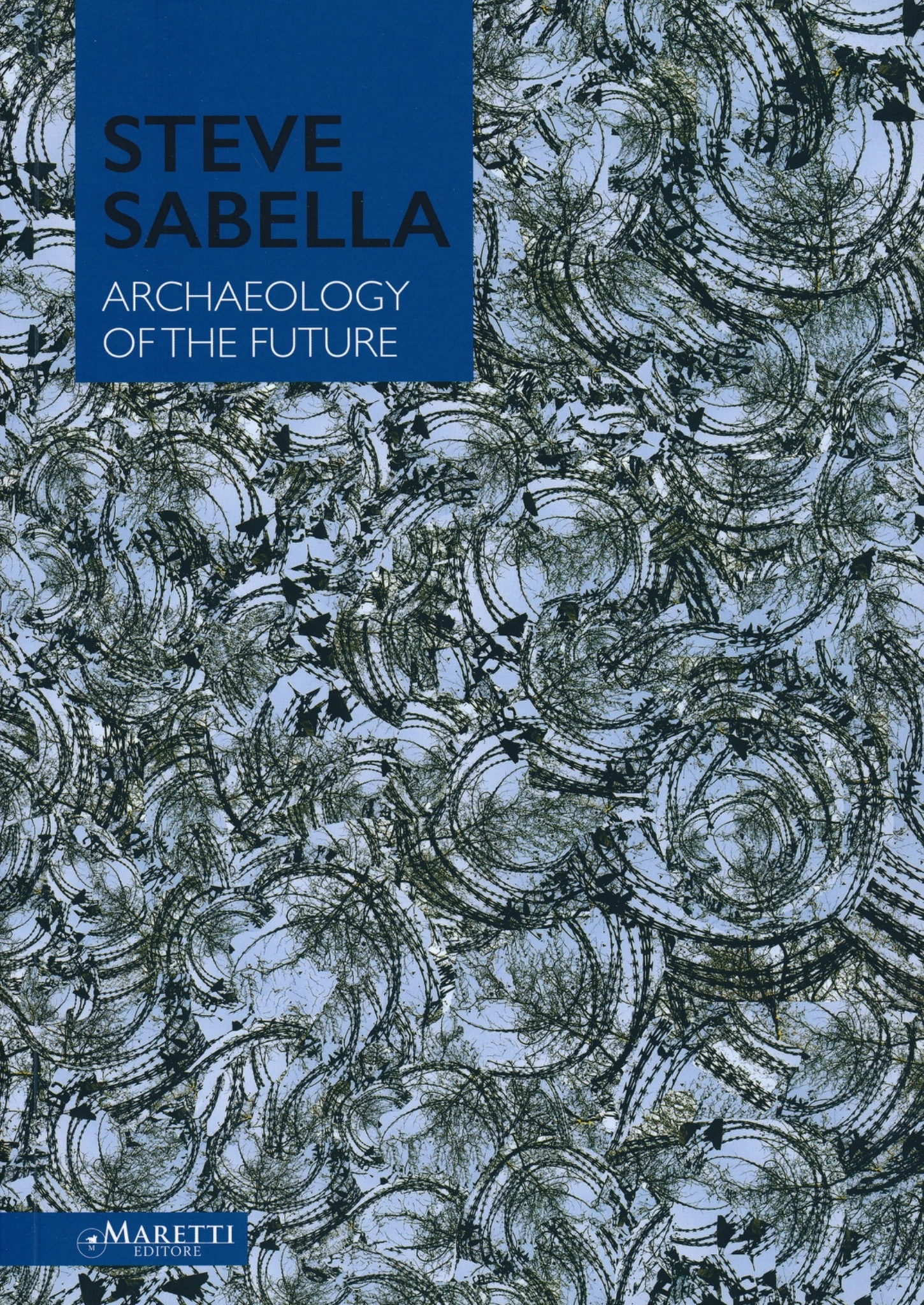
Steve Sabella, Archaeology of the Future — original Maretti Editore catalogue cover
Archaeology of the Future Retrospective exhibition · Verona · 2014 Download catalogue ↓
Read the manuscript

The complete English-language manuscript will accompany the submission as a separate attachment.

This viewing room offers only a short opening extract. The full manuscript is not hosted or downloadable here.

Return to the opening excerpt ↑

The anniversary is not the reason for a new edition.

The book is still reaching readers, while the questions at its heart have only become more urgent.

AN OPTIONAL FINAL ENCOUNTER · BERLIN, 2016

The book, in conversation.

Steve Sabella with Alya Sebti and Almút Sh. Bruckstein.
ICI Berlin Institute for Cultural Inquiry · 18 October 2016.

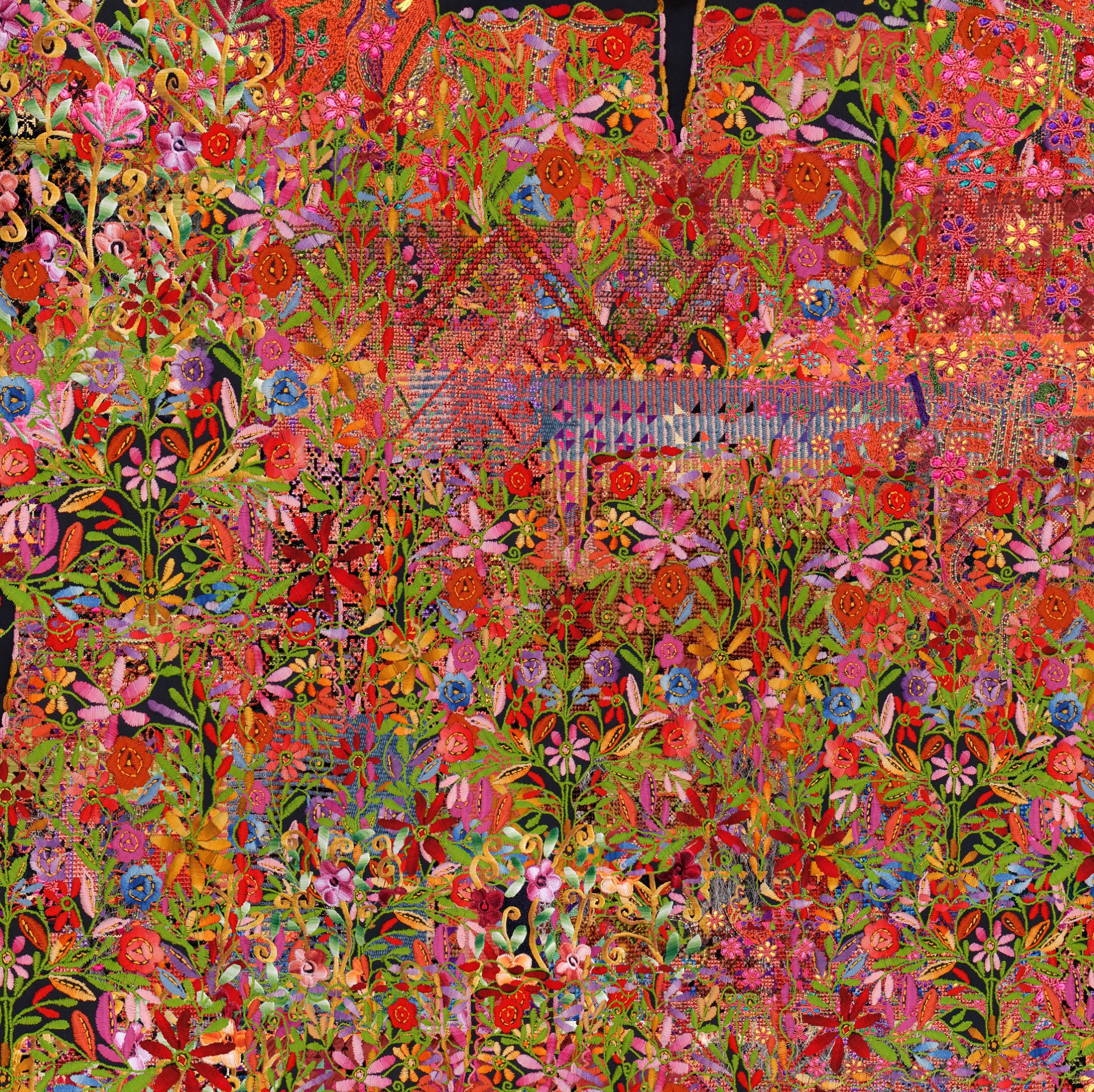
Everland VII by Steve Sabella, 2020: a richly detailed field of embroidered flowers and colourful fabric fragments
Steve Sabella | Everland | 2020Photocollage composed from Palestinian embroidery

Imagination is our last free territory.